
By Erin Hartnett In honor of National Children’s Dental Health Month in February, I would like to introduce you to an exciting resource from the NLN: an ACE.P teaching strategy (Advancing Care Excellence for Pediatrics):
Category: Art & Science of Teaching

Faculty Development in Simulation: Do We Need a Standard?Faculty Development in Simulation: Do We Need a Standard?
By: Tonya Schneidereith The International Nursing Association for Clinical Simulation and Learning (INACSL) has published eight Standards of Best Practice: SimulationSM. These standards were reviewed by multiple health care organizations and, although they originated through

Moving Beyond Monologue in the ClassroomMoving Beyond Monologue in the Classroom
By: Sue Forneris and Mary Fey As educators, there’s no question that we know how to teach … right? Our early Greek philosophers differentiated human beings from other species based on our ability to use

Integrating Care Into SimulationIntegrating Care Into Simulation
By Jean Ellen Zavertnik Caring, the essence of the nursing profession, is an important concept to both the patient and the nurse. We know that caring impacts patient outcomes, patient satisfaction, and nurse satisfaction. Simulation

Makerspaces: If You Can Imagine It…You Can Make ItMakerspaces: If You Can Imagine It…You Can Make It
By: Susan Gross Forneris Makerspaces! While not a new concept, the NLN is viewing the idea of a Makerspace in an …extended way! A Makerspace, in the simplest of terms, is generally defined as a

NLN Expands Focus on Innovation in Education ExcellenceNLN Expands Focus on Innovation in Education Excellence
By: Susan Gross Forneris, Director, Center for Innovation in Education Excellence The NLN is excited to announce a change in focus for the Center for Innovation in Simulation and Technology. Representing a new paradigm for

What Do Strengths Have To Do With It? Building Strong Teams in Nursing EducationWhat Do Strengths Have To Do With It? Building Strong Teams in Nursing Education
By: Jone Tiffany It is human nature to try to fix weaknesses, or dwell on what needs improvement. For example, suppose a child brings home a report card with four As and one C. Where

Stop Lecturing!Stop Lecturing!
By: Susan Gross Forneris Unfortunate as it is, active learning is fast becoming misunderstood. In many teaching circles, active learning is aligned with the buzz phrase flipped classroom…and often equates to creating games to keep
Curriculum Alignment: The Why, The What, The HowCurriculum Alignment: The Why, The What, The How
By: Tonya Schneidereith, PhD, CRNP, PPCNP-BC, CNE, CHSE and Sabrina Beroz, DNP, RN, CHSE Historically, nursing education has included clinical rotations where students care for patients in the clinical setting. This gives students an opportunity

Academia to Bedside: Part 4. The Nurse EducatorAcademia to Bedside: Part 4. The Nurse Educator
Academia to Bedside is a four-part series that focuses on the transition of nursing students from education to their professional role. Part 4 focuses on the role of the Nurse Educator. By: Sabrina Beroz Nurse
Academia to Bedside: What We Know Now. Part 1Academia to Bedside: What We Know Now. Part 1
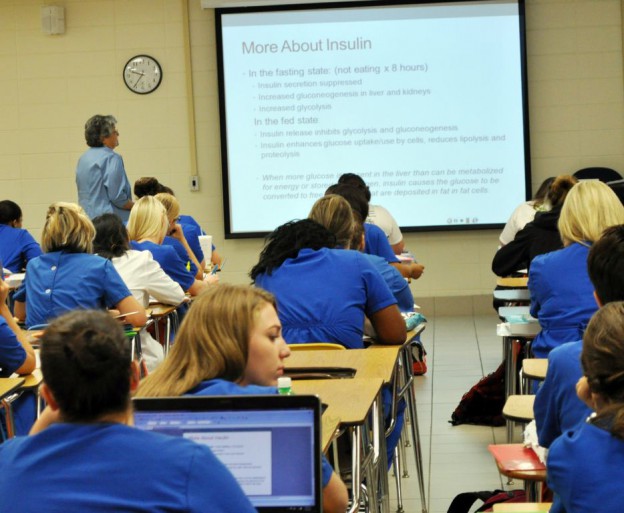
Academia to Bedside is a four-part series that focuses on the transition of nursing students from education to their professional role. Part 1 focuses on “What we know now” about our new graduates. By: Sabrina
Mentoring Each Other: The Faculty Journey In Simulation-Based EducationMentoring Each Other: The Faculty Journey In Simulation-Based Education
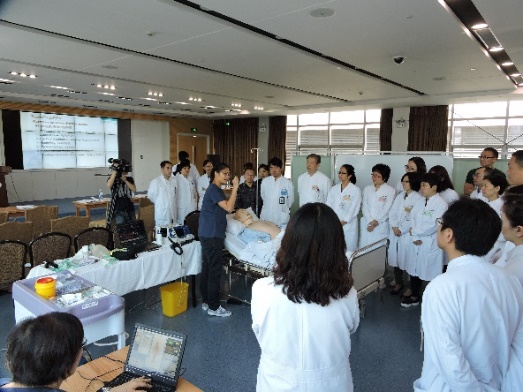
By: Sabrina Koh Faculty development and education leadership are areas that require focus and continuous growth. In Asia, where simulation-based education (SBE) is emerging as a subspecialty in nursing education, it is often assumed that
Reimagining Bloom’s Taxonomy – With an Eye on TechnologyReimagining Bloom’s Taxonomy – With an Eye on Technology
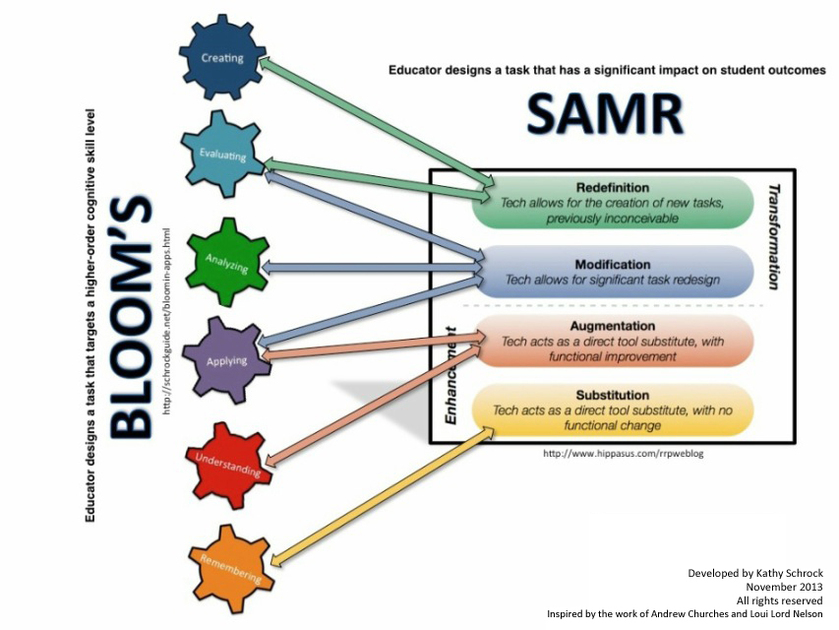
By: Jone Tiffany According to the NMC Horizon report, 2016 Higher Education Edition, trends in the integration of educational technologies in higher education are quickly evolving (Johnson et al., 2016). Topics such as using blended

Future Ready Learning: Is Nursing Education Ready?Future Ready Learning: Is Nursing Education Ready?
The US Department of Education’s 2016 National Education Technology Plan (NETP) outlines a national vision and plan for the use of technology in education, building on the work of technology and education leaders in the