

By: Janet Willhaus This is the final part in the four-part series on the Evaluation of Educators Who Teach Simulation Pedagogy. Read part one, part two, and part three of the series. Many of us learned
Category: Simulation
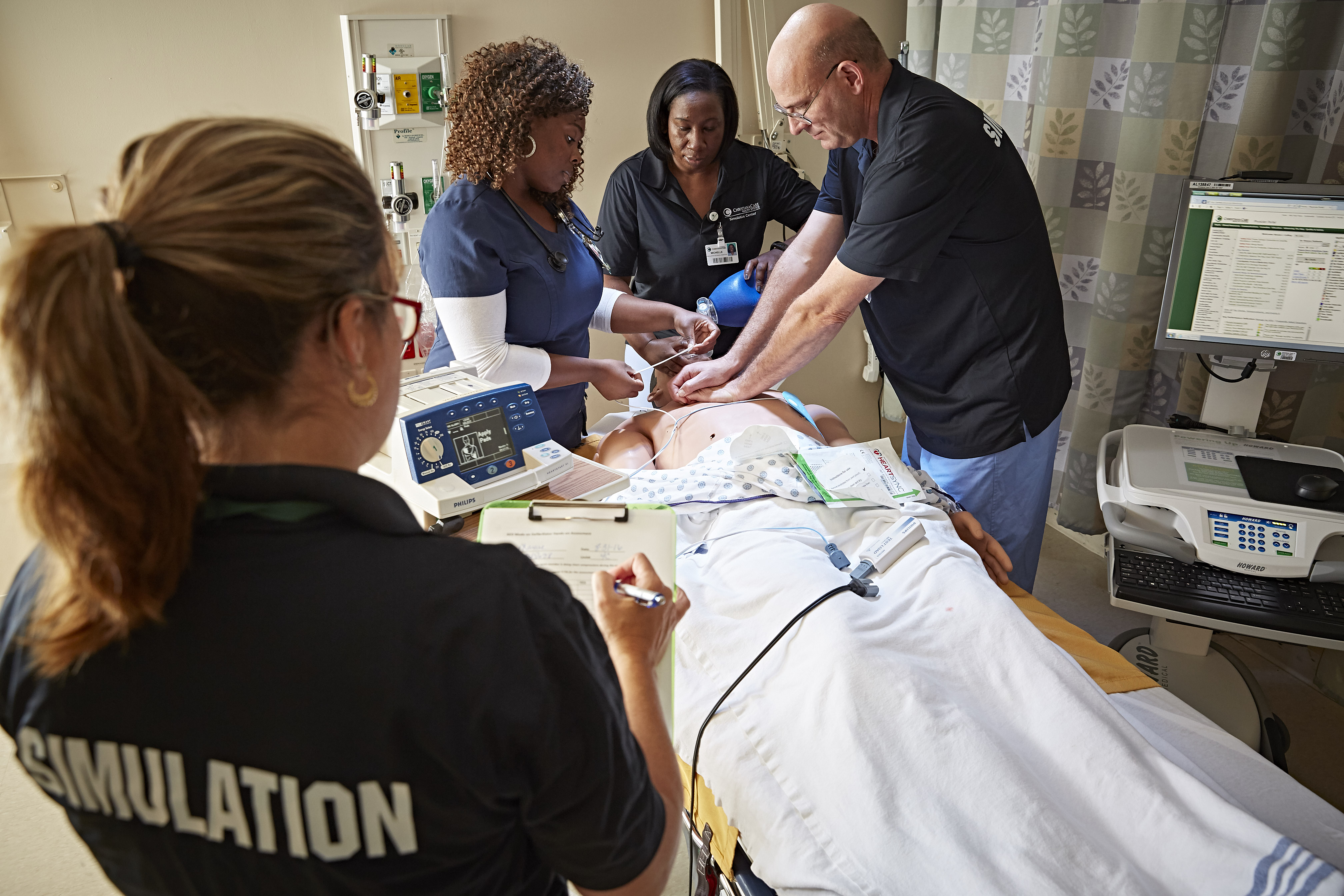
Staffing Models. Part 3 of the 7-Part Series Dissecting the Sim Ops StandardStaffing Models. Part 3 of the 7-Part Series Dissecting the Sim Ops Standard
By: Tonya Schneidereith and Fara Bowler In Part 1 of this series, we talked about how to determine if your program is ready for simulation. In Part 2, we highlighted the role of strategic planning.

The Evaluation of Educators Who Teach Simulation Pedagogy: Part 3 of a 4-Part SeriesThe Evaluation of Educators Who Teach Simulation Pedagogy: Part 3 of a 4-Part Series
By: Beth Hallmark Faculty, clinical and laboratory, in the school of nursing at our university are expected to participate in simulation and debriefing training. While faculty facilitate simulation with human patient simulators, that is not
Connecting Simulation & Patient Safety: Part IIConnecting Simulation & Patient Safety: Part II
By: Allison F. Perry When I first became involved in simulation through the development of the Patient Safety Congress Learning & Simulation Center, which I described in Part I of this two-part series, the direct

Strategic Planning. Part 2 of the 7-Part Series Dissecting the Sim Ops StandardStrategic Planning. Part 2 of the 7-Part Series Dissecting the Sim Ops Standard
By: Tonya Schneidereith and Fara Bowler In Part 1 of this series, we talked about how to determine if your program is ready for simulation. Now, in Part 2, we highlight the role of strategic
Not Everyone Is a Seven: Evaluating the Simulation Educator Part IINot Everyone Is a Seven: Evaluating the Simulation Educator Part II
By: Alaina Herrington This is the second part in the four-part series on the Evaluation of Educators Who Teach Simulation Pedagogy. Read part one of the series. The INACSL Standards of Best Practice SM (2016)

Connecting Simulation & Patient Safety: Part IConnecting Simulation & Patient Safety: Part I
By: Allison F. Perry My first exposure to health care simulation came in early 2010 while working for the National Patient Safety Foundation (NPSF), now merged with the Institute for Healthcare Improvement (IHI), where I

The Evaluation of Educators Who Teach Simulation Pedagogy: Part I of a 4-Part Series Who’s Looking Downstream at Simulation Train the Trainer Participants?The Evaluation of Educators Who Teach Simulation Pedagogy: Part I of a 4-Part Series Who’s Looking Downstream at Simulation Train the Trainer Participants?
By: Sabrina Beroz This is the first in a series of four blogs on the evaluation of educators who teach simulation pedagogy. Many institutions send their educators to Train the Trainer programs. The hope is

Are You Ready for Simulation? Part 1 of the 7-Part Series Dissecting the Sim Ops StandardAre You Ready for Simulation? Part 1 of the 7-Part Series Dissecting the Sim Ops Standard
By: Tonya Schneidereith, Colette Foisy-Doll, and Kim Leighton When simulation was shown to be an effective substitute for clinical experiences when certain criteria are met (Alexander et al., 2015; Hayden, Smiley, Alexander, Kardong-Edgren, & Jeffries,

Does Your Sim Center Have What It Takes To Be a Film Location?Does Your Sim Center Have What It Takes To Be a Film Location?
By: Alaina Herrington Film producers and directors are always looking for realistic health care settings. However, hospitals and clinic locations are difficult to secure. Because simulation centers have state-of-the-art equipment and replicate health care settings

Looking at the Future – Simulation Alliances and Consortia Part 4Looking at the Future – Simulation Alliances and Consortia Part 4
By: Sabrina Beroz We have already discussed best practices, successes and challenges, and outcomes of simulation alliances and consortia. Now it is time to look to the future and talk about the certainty of change.

Impact: Part 3 of the Series From Nursing Student to Patient and Back AgainImpact: Part 3 of the Series From Nursing Student to Patient and Back Again
In this three-part Ask the Expert Series, we feature Bhavana Aitha, a senior nursing student at the University of Delaware who explores the reciprocal benefits of working as a simulated patient while helping her university

Outcomes of Two Statewide Simulation InitiativesOutcomes of Two Statewide Simulation Initiatives
By: Sabrina Beroz and Beth Hallmark The use of simulation as a teaching-learning strategy has advanced at a rapid pace in the education of nurses. Schools of nursing and hospitals recognize that simulation is an

Developing Best Practices for Statewide Simulation InitiativesDeveloping Best Practices for Statewide Simulation Initiatives
By: Beth Hallmark and Alaina Herrington Tennessee Simulation Alliance (Beth) The Tennessee Simulation Alliance began as a means to provide Tennessee nurse educators with a central location for communication, collaboration, and sharing. A national collaborative

NLN Sim Leader Alum in the Shark Tank: An NLN TEQ Blog Video Interview with Amy CowperthwaitNLN Sim Leader Alum in the Shark Tank: An NLN TEQ Blog Video Interview with Amy Cowperthwait
Sue Forneris, Director of the NLN Center for Innovation in Simulation and Technology interviewed Amy Cowperthwait, NLN Sim Leader Alumni, CEO of Avkin, and nursing faculty at the University of Delaware. Sue spoke to Amy